Task management for
hyper-agile agentic coding teams
A shared stream where your team posts requests and screenshots, groups them into issues with a drag, and hands them to Claude Code or Codex. The agent does the work and asks its questions right there in the thread. No tickets, no forms, nothing pasted into a terminal.
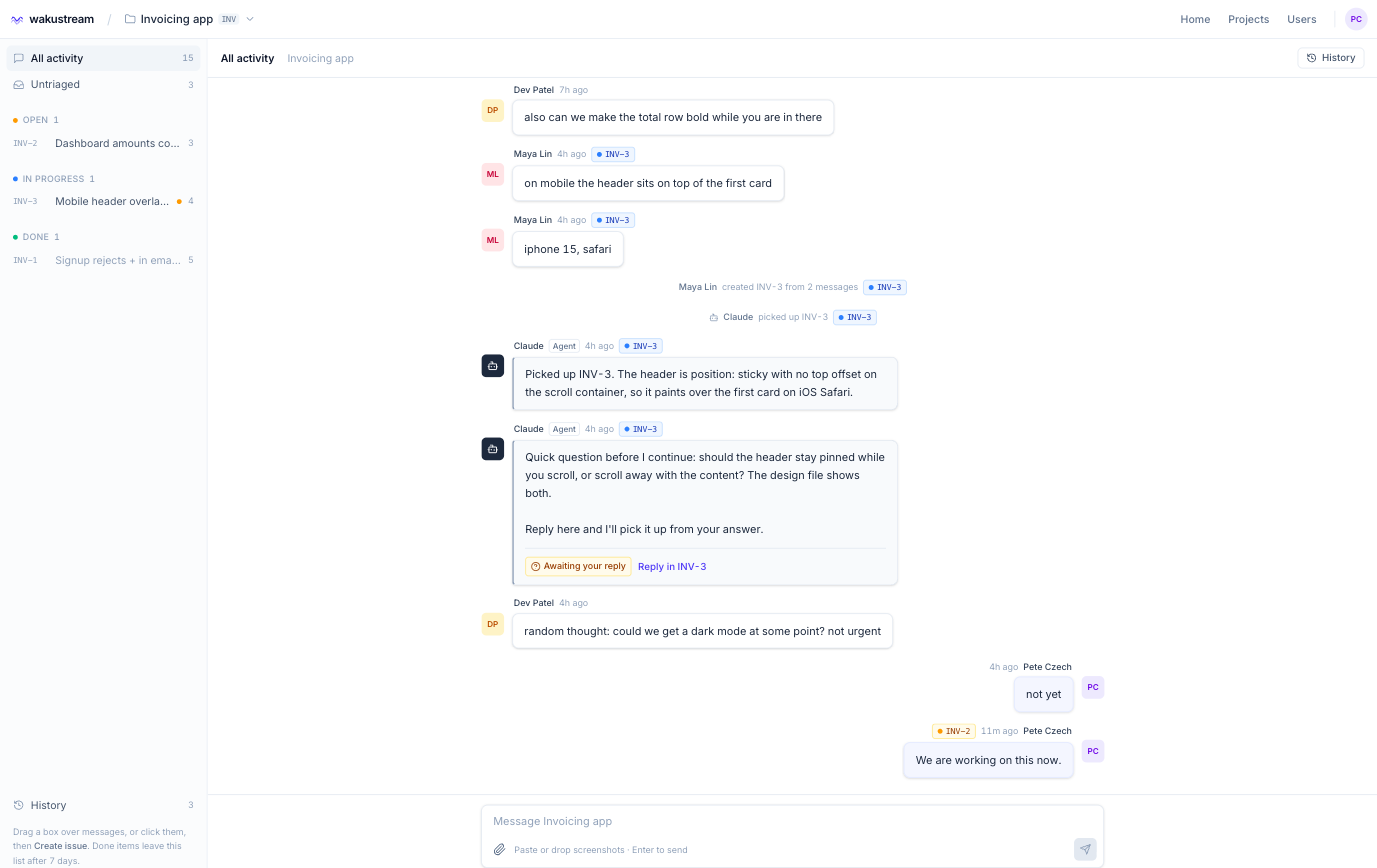
Issue trackers assume a human will do the work
When an agent does the work, the bottleneck moves. The agent needs context the way a teammate gets it: the chat, the screenshots, the follow-ups. And it needs to ask a question without someone babysitting a terminal. wakustream is a stream first and a tracker second.
Chat like you already do
Messages and screenshots are the primary thing. Nobody fills in a form to report a bug. Partners post from their phone.
Draw an issue over the chat
Drag a box around a few messages, click Create issue. The thread, with its images, becomes the issue. Nothing gets retyped.
Your coding agent picks it up
Claude Code, Codex or any MCP-capable agent lists open issues, reads the thread and screenshots, does the work, and posts what it changed and how to verify it.
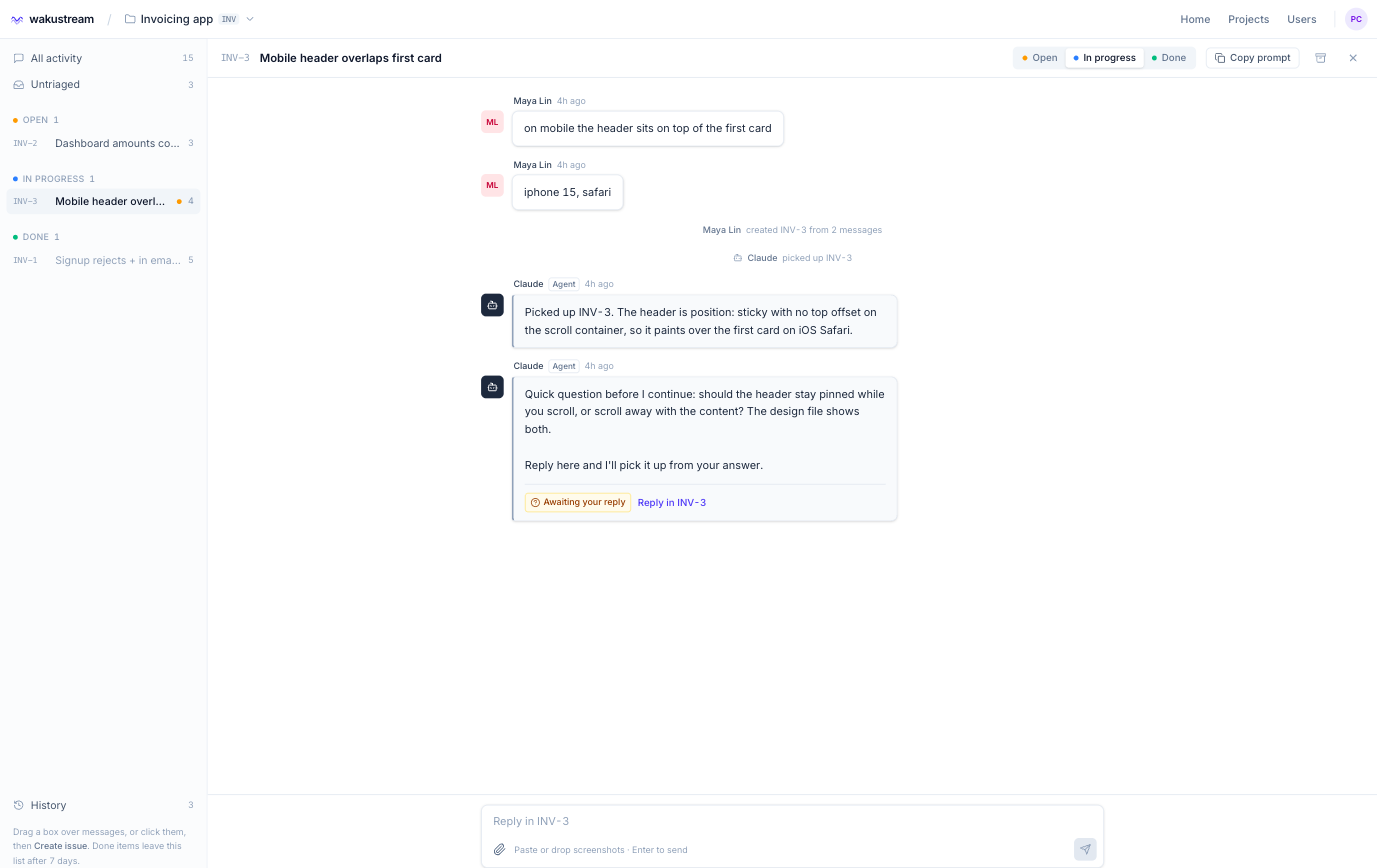
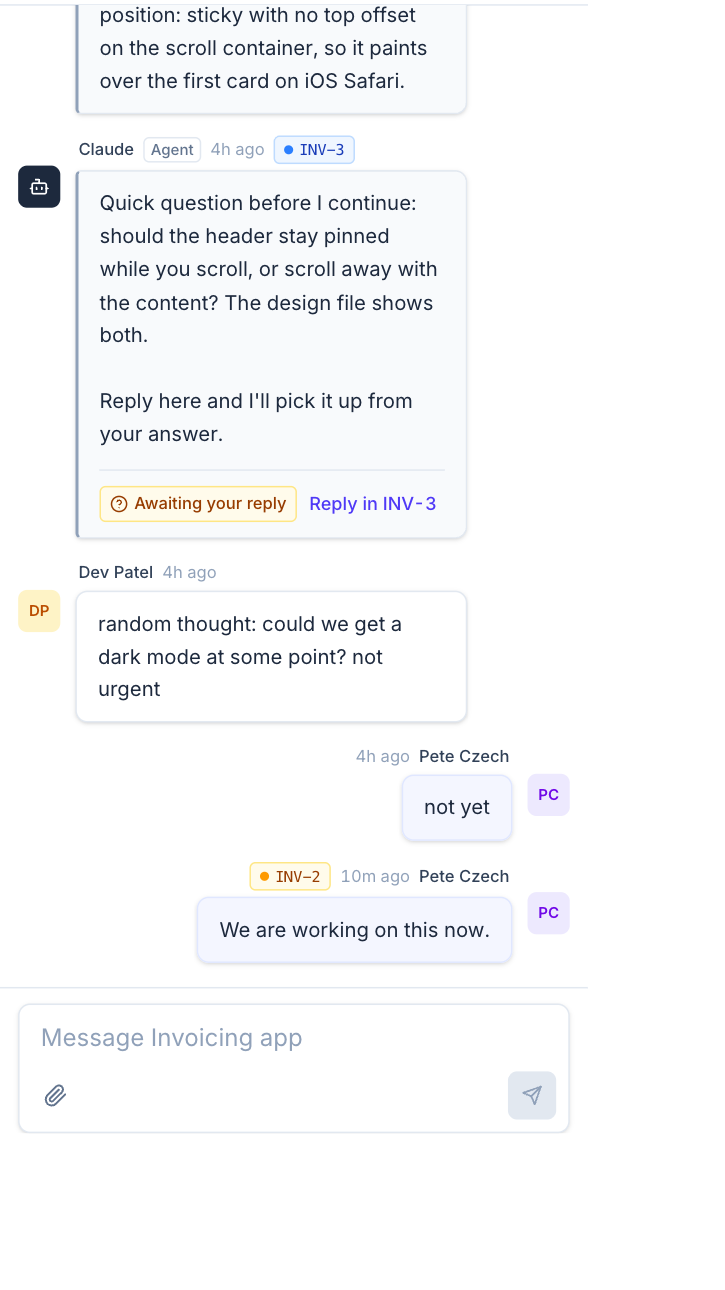
The agent asks. You answer in the chat. It carries on.
Agents surface decisions mid-task. In wakustream that question lands in the issue as an agent bubble marked Awaiting your reply. The person already chatting in that issue answers there. The agent gets the answer on its next read and keeps going.
No Slack ping, no terminal prompt someone has to be sitting at.
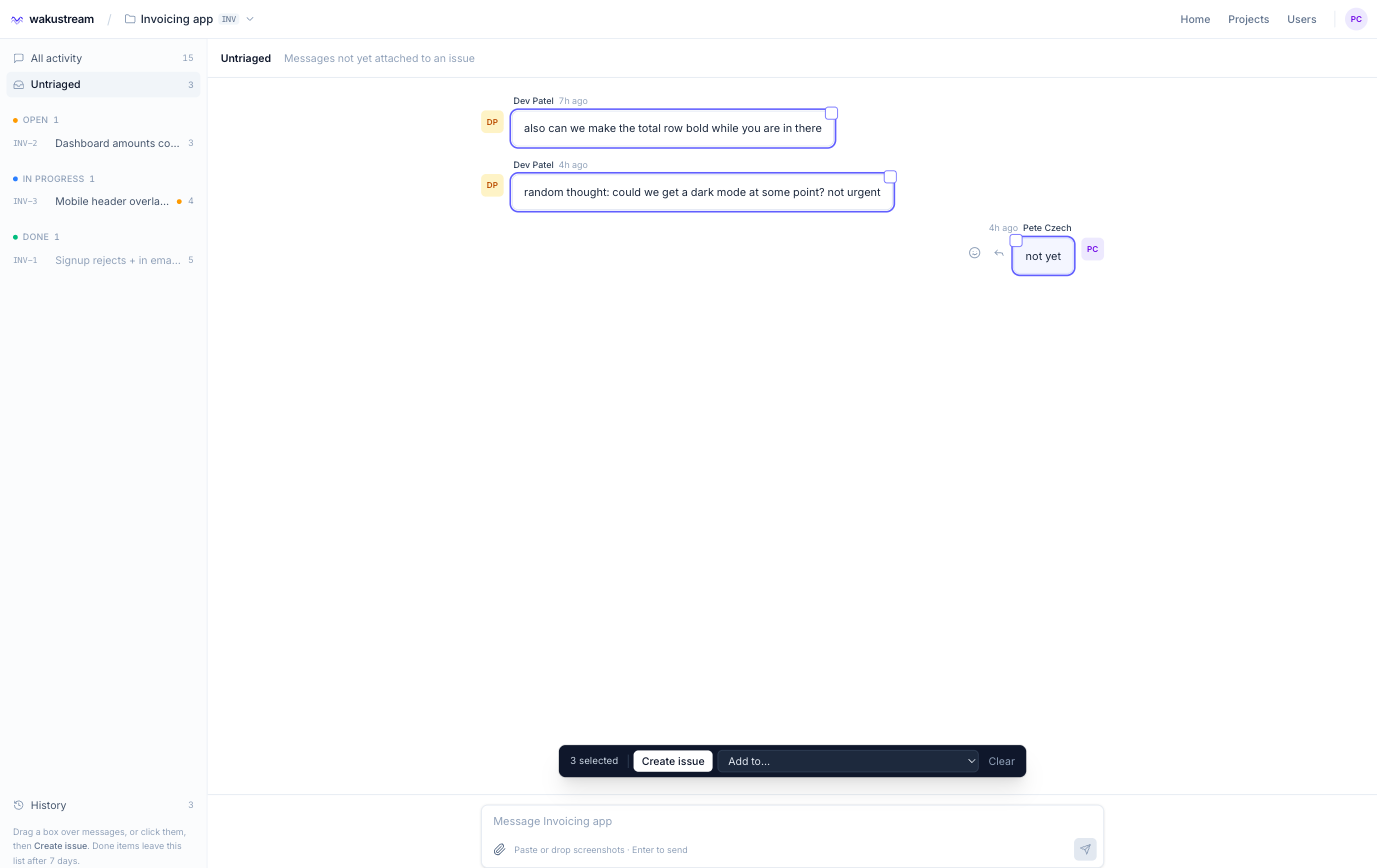
Lasso messages into an issue
Drag a selection box over the stream, or tap messages on a phone. Create a new issue or add them to an existing one. A message belongs to one issue, so nothing gets duplicated or silently moved.
Loose messages stay in an Untriaged view until someone decides what they are.
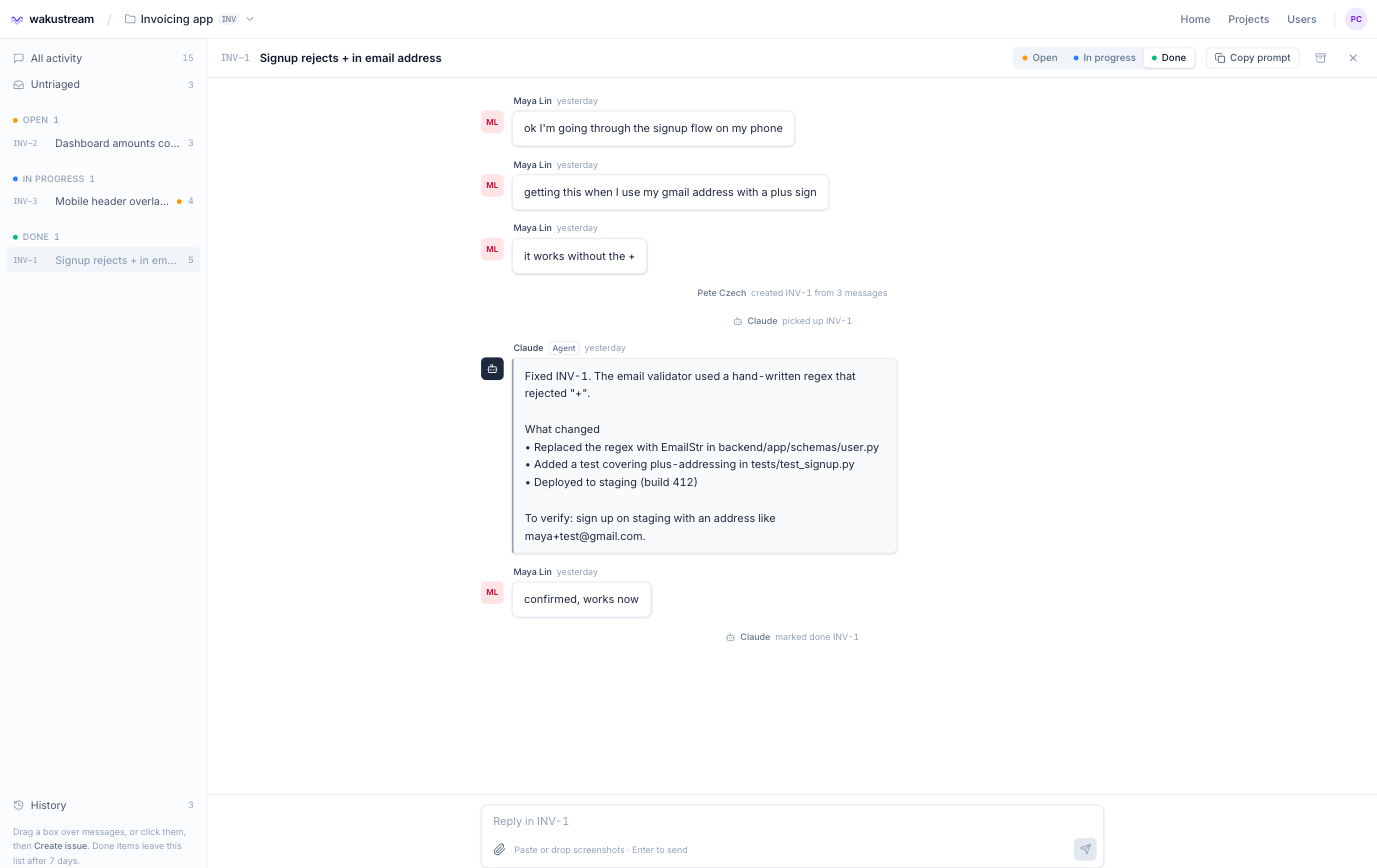
Every issue ends with a receipt
When the agent finishes, it posts what changed, where, and how to check it, then marks the issue Done. The person who reported it confirms in the same thread. The whole history stays attached to the issue.
One dashboard, honest numbers
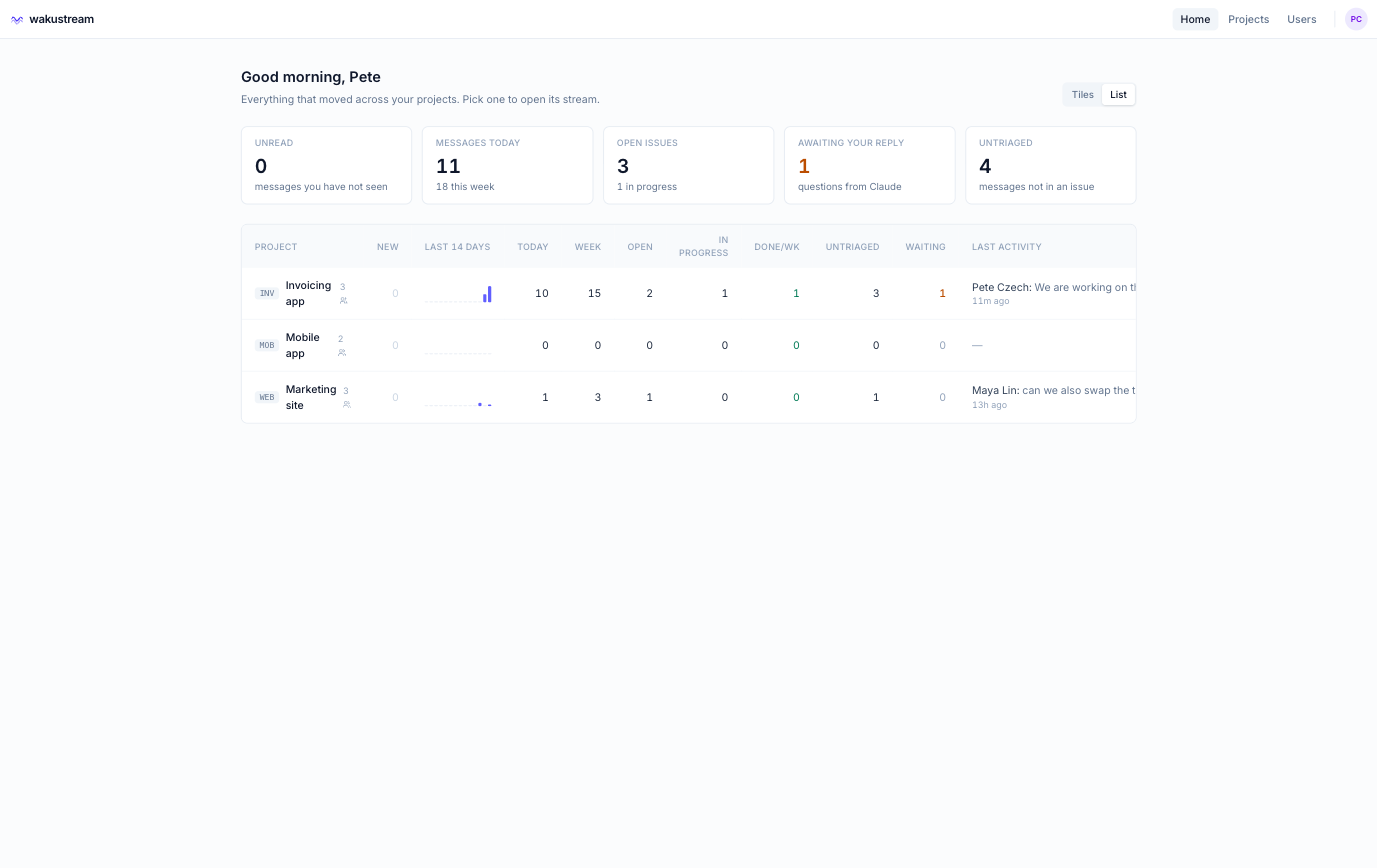
Unread messages, open issues, questions waiting on you, untriaged chatter, and a 14-day pulse per project. Open a project and you are in its stream.
- Per-person read tracking, so "new" means new to you
- Tab title and app badge show what is waiting
- Quote replies and a small fixed set of reactions
Built for the partner on the go
The people who spot problems are often not at a desk. wakustream works as an add-to-home-screen app: a camera button on the composer, images downscaled on the device before upload, and a drawer for the issue rail.
Give your coding agent a seat in the conversation
wakustream is in early access with a small number of teams. Tell us about yours.